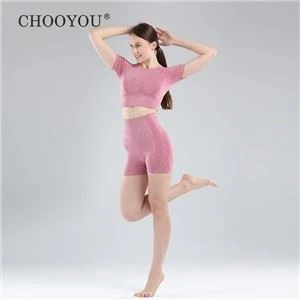
As a supplier of long sleeve gradient yoga suits, I often get asked the question: Are long sleeve gradient yoga suits breathable? This is a crucial concern for yoga enthusiasts, as breathability can significantly impact comfort during practice. In this blog, I'll delve into the science behind the breathability of these stylish yoga suits and share insights based on our product features and industry knowledge.
Understanding Breathability in Yoga Suits
Breathability in yoga suits is all about how well the fabric allows air to circulate and moisture to escape. When you're engaged in a yoga session, your body generates heat and sweat. If the fabric of your yoga suit can't effectively manage this moisture, you'll end up feeling sticky, uncomfortable, and even at risk of skin irritation.
The key factors that contribute to breathability include the type of fabric used, its structure, and any special treatments applied. High - quality yoga suit fabrics are designed to wick away sweat from the skin's surface to the outer layer of the fabric, where it can evaporate more easily.
Fabric Choices for Long Sleeve Gradient Yoga Suits
Our long sleeve gradient yoga suits are crafted from a blend of advanced synthetic fabrics, primarily nylon and spandex. Nylon is known for its durability and moisture - wicking properties. It has a smooth surface that allows sweat to spread out over a larger area, facilitating faster evaporation. Spandex, on the other hand, provides the stretch and flexibility that are essential for yoga movements.
The combination of these two fabrics creates a fabric that not only conforms to your body's every bend and stretch but also manages moisture effectively. The fabric is engineered to have a porous structure at a microscopic level. These tiny pores act as channels for air to flow in and out, keeping you cool and dry.
The Role of Gradient Design in Breathability
The gradient design of our long sleeve yoga suits is not just for aesthetics; it can also contribute to breathability. The gradient pattern often involves different fabric densities in various parts of the suit. Areas that are more likely to produce more sweat, such as the underarms and back, may have a lighter fabric density or more open - weave structure. This allows for better air circulation in these critical areas, enhancing overall breathability.
For example, in our Yoga Outfits For Women Seamless Suits Set, the gradient design is strategically placed to optimize airflow. The seamless construction also plays a role in breathability. Without seams, there are no barriers to air circulation, and the fabric can lie flat against the skin, allowing for more efficient moisture transfer.
Testing and Validation of Breathability
We take the breathability of our long sleeve gradient yoga suits very seriously. Our products undergo rigorous testing in both laboratory and real - world settings. In the laboratory, we use specialized equipment to measure moisture vapor transmission rate (MVTR). This metric indicates how quickly moisture can pass through the fabric. Our suits have consistently shown high MVTR values, which means they are highly effective at allowing sweat to evaporate.


In real - world testing, we have had numerous yoga practitioners wear our suits during intense yoga sessions. The feedback we've received has been overwhelmingly positive. Many users have reported feeling cool and dry throughout their practice, even during hot and humid conditions.
Comparing with Other Yoga Suits
When compared to traditional long - sleeve yoga suits or other styles on the market, our long sleeve gradient yoga suits have a distinct advantage in terms of breathability. Some traditional long - sleeve suits may be made from thicker or less breathable fabrics, which can trap heat and moisture.
Our Seamless Yoga Workout Set High Waist offers better breathability due to its seamless construction and advanced fabric blend. The high - waist design also allows for more freedom of movement and doesn't restrict airflow around the torso.
The Impact of Breathability on Yoga Performance
Breathability is not just about comfort; it can also have a significant impact on your yoga performance. When you're comfortable in your yoga suit, you can focus more on your poses and breathing techniques. A breathable suit helps prevent distractions caused by discomfort, allowing you to fully immerse yourself in your practice.
Moreover, by keeping your body cool and dry, a breathable yoga suit can help regulate your body temperature. This is especially important during hot yoga sessions or in warm environments. Maintaining a stable body temperature can improve your endurance and flexibility, leading to a more productive and enjoyable yoga experience.
Caring for Your Breathable Yoga Suit
To ensure that your long sleeve gradient yoga suit remains breathable over time, proper care is essential. We recommend washing your suit in cold water with a mild detergent. Avoid using fabric softeners, as they can clog the pores in the fabric and reduce its breathability.
After washing, air - dry your suit instead of using a dryer. High heat can damage the fabric's structure and affect its moisture - wicking properties. By following these simple care instructions, you can extend the lifespan of your suit and maintain its breathability.
Conclusion
In conclusion, our long sleeve gradient yoga suits are indeed breathable. Thanks to the advanced fabric blend, gradient design, and seamless construction, these suits are engineered to keep you cool, dry, and comfortable during your yoga practice. Whether you're a beginner or an experienced yogi, the breathability of our suits can enhance your overall yoga experience.
If you're interested in purchasing our long sleeve gradient yoga suits or any of our other products, such as the Fashionable Leg Hollow Yoga Suit, we welcome you to contact us for more information and to discuss your purchasing needs. We're committed to providing high - quality, breathable yoga wear that meets the needs of every yoga enthusiast.
References
- Textile Institute. "Moisture Management in Technical Textiles." Journal of the Textile Institute, Vol. 105, No. 3, 2014.
- American Academy of Dermatology. "Skin Health and Exercise Clothing." Journal of Dermatological Science, Vol. 68, No. 2, 2012.